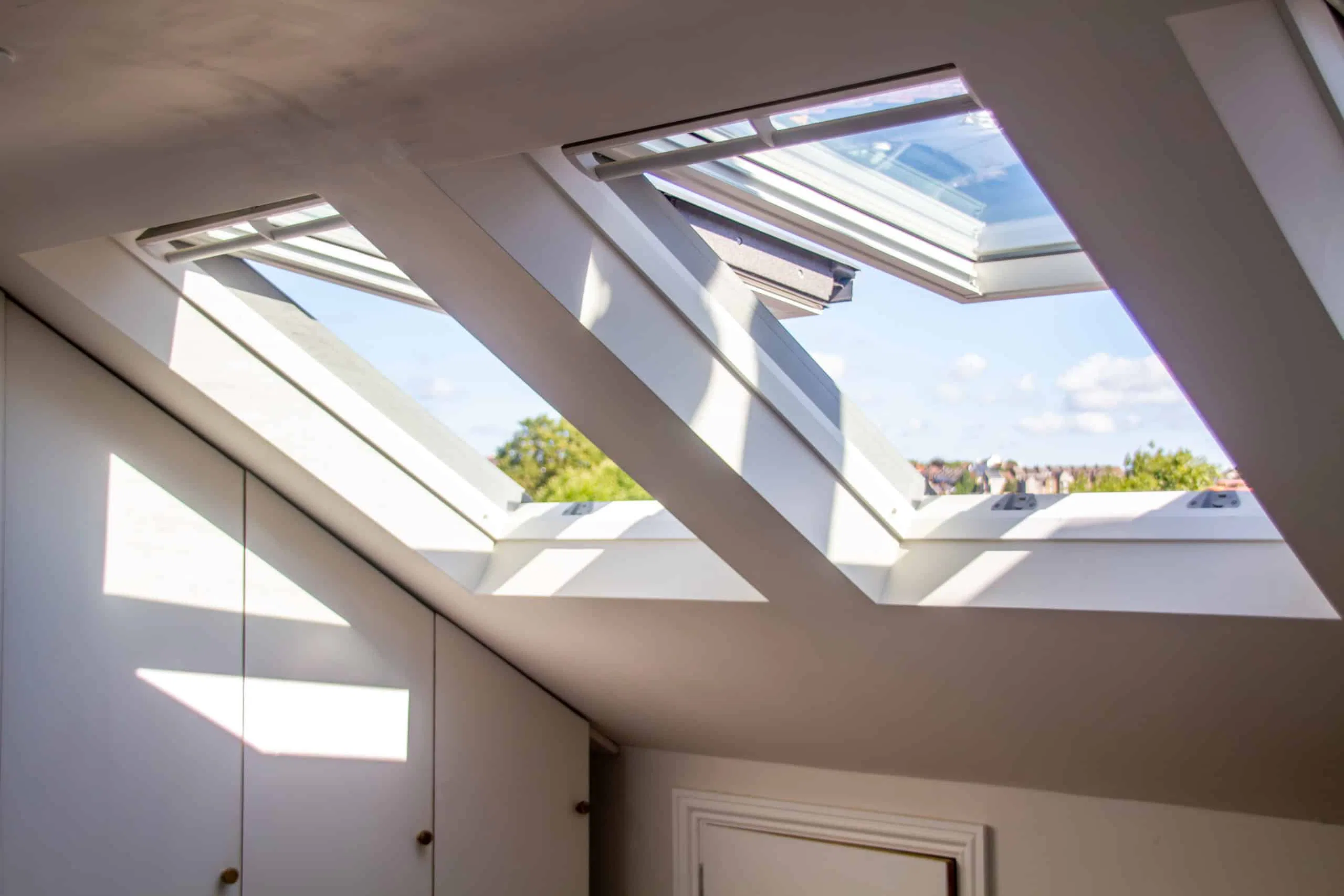
Lofts turn into ovens during a UK summer faster than any other room in the house. They sit directly under the roof, which spends all day soaking up the sun, while warm air from the rest of the house rises and settles at the highest point it can reach. Add a roof window or two into the mix, and by late afternoon your loft is being heated from above, from below, and straight through the glass all at once.
None of that makes the room a lost cause, though. Most of what actually helps has nothing to do with rebuilding anything. It comes down to how and when you use the room you’ve already got.
The Biggest Mistake We See During Every Heatwave
One of the biggest misconceptions homeowners have is that opening every window the moment the weather turns hot will cool the room down. It often does the opposite. Say it’s thirty degrees outside and your loft still sits cooler indoors. Opening the windows through the hottest part of the afternoon just lets more heat pour straight in.
So early in the morning, while the air outside is still cool, open your roof windows along with a window on the floor below. Warm air trapped overnight rises and escapes out through the top, while cooler air gets drawn in from below to replace it, a bit like a chimney. Once outdoor temperature starts climbing past indoor temperature, usually around mid-morning, close everything back up: the blinds, the curtains, the windows, all of it, before the sun climbs high enough to start warming the glass. Then, once outdoor air drops below indoor temperature again, usually early evening, you open everything wide and let the house release whatever heat’s built up through the day.
Keep the Airflow You’ve Already Got Moving
If your loft has windows on opposite sides, use them properly once the sun’s off the glass and the air outside has cooled. Crack open a window on each side, plus a downstairs window or door on the shaded side of the house, and warm air rises and escapes out through the top while cooler air gets pulled in through the bottom.
A fan at the bottom of the stairs, pointed upward, gives that draught a helping push on a still night. Pair it with a second fan up in the loft, positioned to blow straight out of the open window, and you’re working the chimney effect from both ends, one fan pushing hot air out at the top and the other pulling cool air in at the bottom. This is strictly an evening and overnight trick though. Do it in the afternoon, while it’s still hotter outside than in, and both fans are just pulling hot air into the house faster.
One thing worth knowing is that the fan’s cooling effect reduces greatly once the room itself passes roughly thirty-five degrees. Past that point, all a fan is doing is moving already-hot air around, which doesn’t cool anyone down.
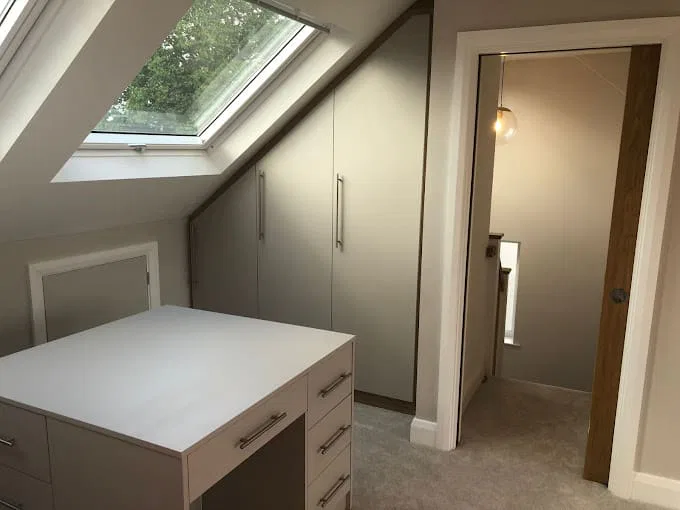
It’s also worth checking what’s in the way. A large wardrobe or chest of drawers sitting directly under a roof window, or blocking the path between two windows on opposite sides, interrupts the airflow you’re relying on and can make a room feel warmer than it should, even with everything open.
The loft hatch (if you still have one) works on the same principle as the windows. Keep it shut during the day, since an open hatch lets superheated air from the roof space above spill straight down into the stairwell below. Wait until the loft itself has properly cooled down before opening the hatch back up.
Cheap Tricks Worth Trying First
- Kitchen foil taped to the glass, shiny side facing out, blocks a good chunk of the sun’s heat for next to nothing. Use masking or painter’s tape round the edges rather than anything stronger, since it holds the foil in place without leaving residue or marking the frame when you take it down. This works well on a vertical dormer loft window. Skip it on a Velux or any sloped roof window though, because foil on angled glass heats unevenly, and more than one loft owner has ended up with a cracked pane after trying it there.
- Ceiling fans don’t lower the actual temperature, but they improve air movement, making the room feel several degrees cooler by helping sweat evaporate faster. Without a ceiling fan, a quality pedestal fan positioned to support natural airflow works surprisingly well as a stand-in.
- A wet towel works on a similar idea, though the timing matters here. Wring the towel out so it stays damp rather than dripping, then hang the towel over the frame of whichever window stays open for the evening or morning purge, so the incoming breeze passes straight through the fabric. As air moves through the damp towel, water evaporates, and evaporation pulls heat out of the air in the process. This trick only works while air moves through an open window. A wet towel hung over closed glass does nothing, and none of this gives a reason to open a window in the middle of a hot afternoon.
- It’s also worth paying attention to everyday sources of heat inside the room. Computers, televisions, gaming consoles, and powerful lighting all generate heat, especially when used for long periods. Switching to LED lighting, turning equipment off when it’s not needed, and avoiding unnecessary appliances during the hottest part can reduce the overall heat load.
- Even your bedding can make a difference. Lightweight cotton or linen bedding allows more airflow than heavier synthetic materials, making hot nights far more comfortable.
Plain Old Air Conditioning
Shading, ventilation, and insulation only get a room so far sometimes, and this becomes the point where actual air conditioning turns worth considering.
A portable air conditioning unit, the kind with a hose that vents out through a window, is the option most people reach for first, since it needs no building work and you can set it up in an afternoon. Keep the hose run as short as possible and seal any gap around the window properly. A poorly sealed gap lets nearly as much hot air back in as the unit is pushing out, which defeats the point of running it. Never vent the exhaust hose into the eaves just to avoid drilling a hole through a wall either. Trapped moisture in that space causes condensation and rot over time, and the repair bill ends up far higher than a proper vent would have cost.
For a room used every day, a small mini-split system is worth the extra spend. This kind has a compressor sitting outside and a unit mounted on the wall inside, usually rated around 2 to 2.5 kW for a typical loft bedroom. This system cools in summer, heats in winter, and runs quietly.
Evaporative coolers, the kind that cool air by blowing air over water, get plenty of attention online, though UK loft conversions deserve a second thought before buying one. These units work best in dry climates, and the air here usually carries too much dampness already for the process to work properly. On a humid night, an evaporative cooler often adds more dampness to a room already sticky, rather than cooling the space down.
One last check while you’re at it. If your windows have trickle vents, make sure they’re not painted shut or blocked by a blind. They’re designed to let a small amount of air through even when the window itself is closed, and a blocked one quietly undoes some of the ventilation work you’re doing everywhere else.