
Own the Top Floor? Your Maisonette Loft Might Be the Space You’ve Been Missing
Own the Top Floor? Your Maisonette Loft Might Be the Space You’ve Been Missing
If your maisonette is on the upper floor and you have roof space above, a loft conversion is absolutely possible.
But there’s a reason a lot of people assume maisonette conversions can’t be done. They come with layers of complexity that houses don’t have, e.g., freehold and leasehold questions, shared walls with neighbours above and below, planning permission requirements that don’t apply to houses, and sometimes leaseholders downstairs with rights to the loft space that need resolving before you start.
This puts a lot of people off, but it shouldn’t, because they are all solvable problems. They need to be dealt with properly and in the right order, but none of them are deal-breakers.
At CS Lofts, maisonette conversions are a regular part of our workload across London, Surrey, and Kent. We handle everything from the initial roof survey and structural design through to the finished build.


Find Out More About Maisonette Loft Conversions
Can I Convert the Loft Above My Maisonette? Do I Even Own the Loft Space?
In many cases, yes, but the first question is not about the build. It is whether you have the legal right to use the loft space.
Unlike a traditional house, where the owner’s rights over the roof space are generally very straightforward, a maisonette sits within a building that usually has a lease arrangement of some kind, so whether you actually own the loft depends entirely on the specific wording of your lease.
In some cases, you get lucky, and the loft is explicitly included in the ‘demise’ of your flat, which means it is already yours to develop, subject to getting the right planning permissions. In other scenarios, the loft space might technically belong to the freeholder, meaning it needs to be purchased or leased separately before any work can even begin.
And then, of course, you have situations where the maisonette sits in a share-of-freehold arrangement, where you and the downstairs owner both hold a share, which means any major structural changes require the other party’s written agreement.
Will My Freeholder Let Me Do It?
Even if you technically own the space, almost every single maisonette lease contains a specific clause saying you cannot carry out major structural alterations without the freeholder’s written consent.
That consent cannot be unreasonably withheld, but the freeholder is within their rights to ask for detailed plans, a structural engineer’s report, and proof that the work meets building regulations. They may also charge you their legal and surveyor’s fees for having their own experts review your application and grant that official consent.
Do Maisonette Loft Conversions Need Planning Permission?
Yes. Every single time. This is the big difference between a maisonette and a house.
Houses and some semi-detached properties benefit from permitted development rights, which let you extend the roof within set limits without a planning application. Maisonettes and flats do not have Permitted Development rights. That means a full planning application to your local council, regardless of how small the conversion is. Even a Velux window in the roof needs planning approval on a maisonette.
Building regulations are separate. Even after planning is dealt with, the conversion still has to meet building regulations for structure, fire safety, insulation, ventilation, staircase design, electrics, and final sign-off.
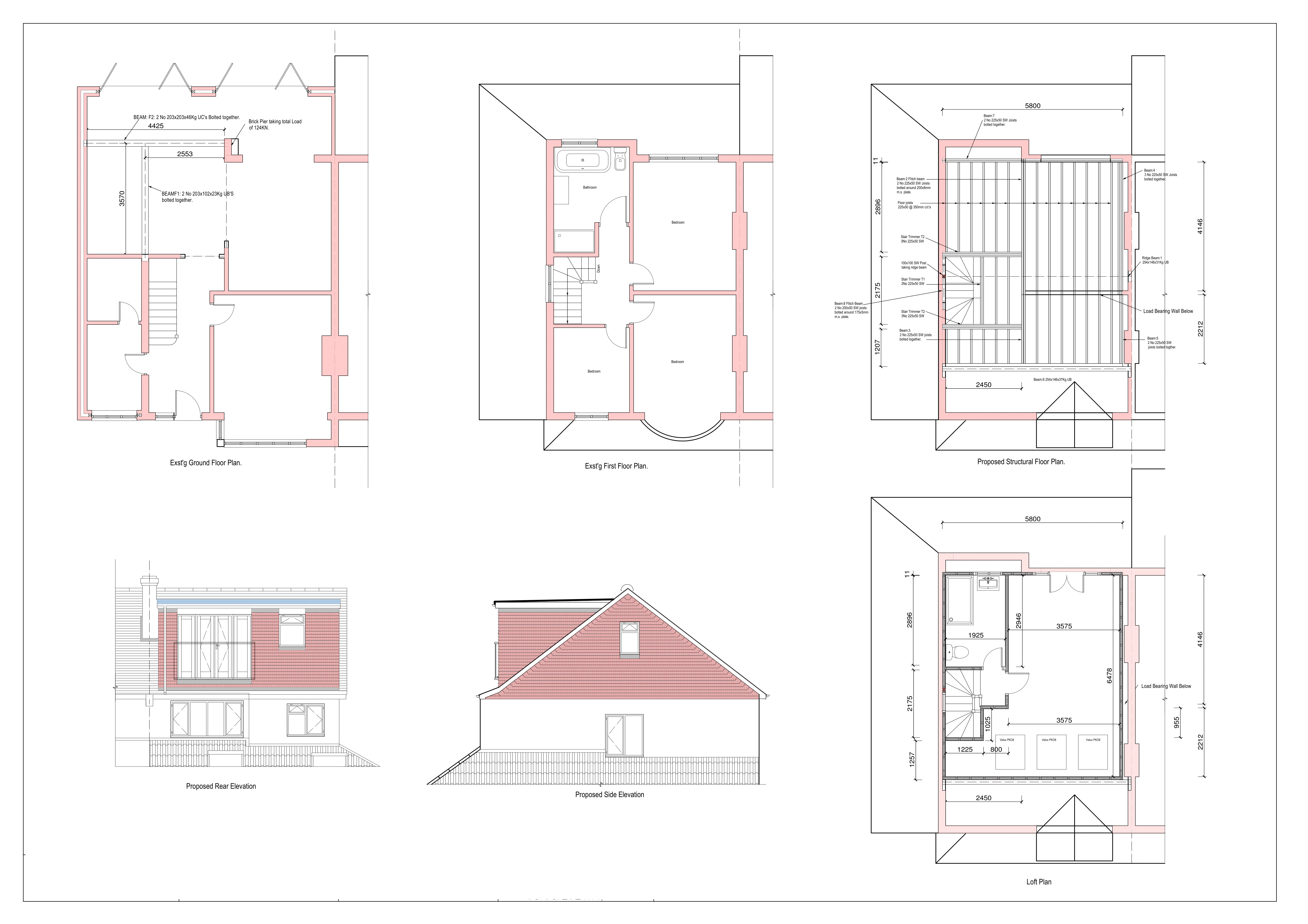
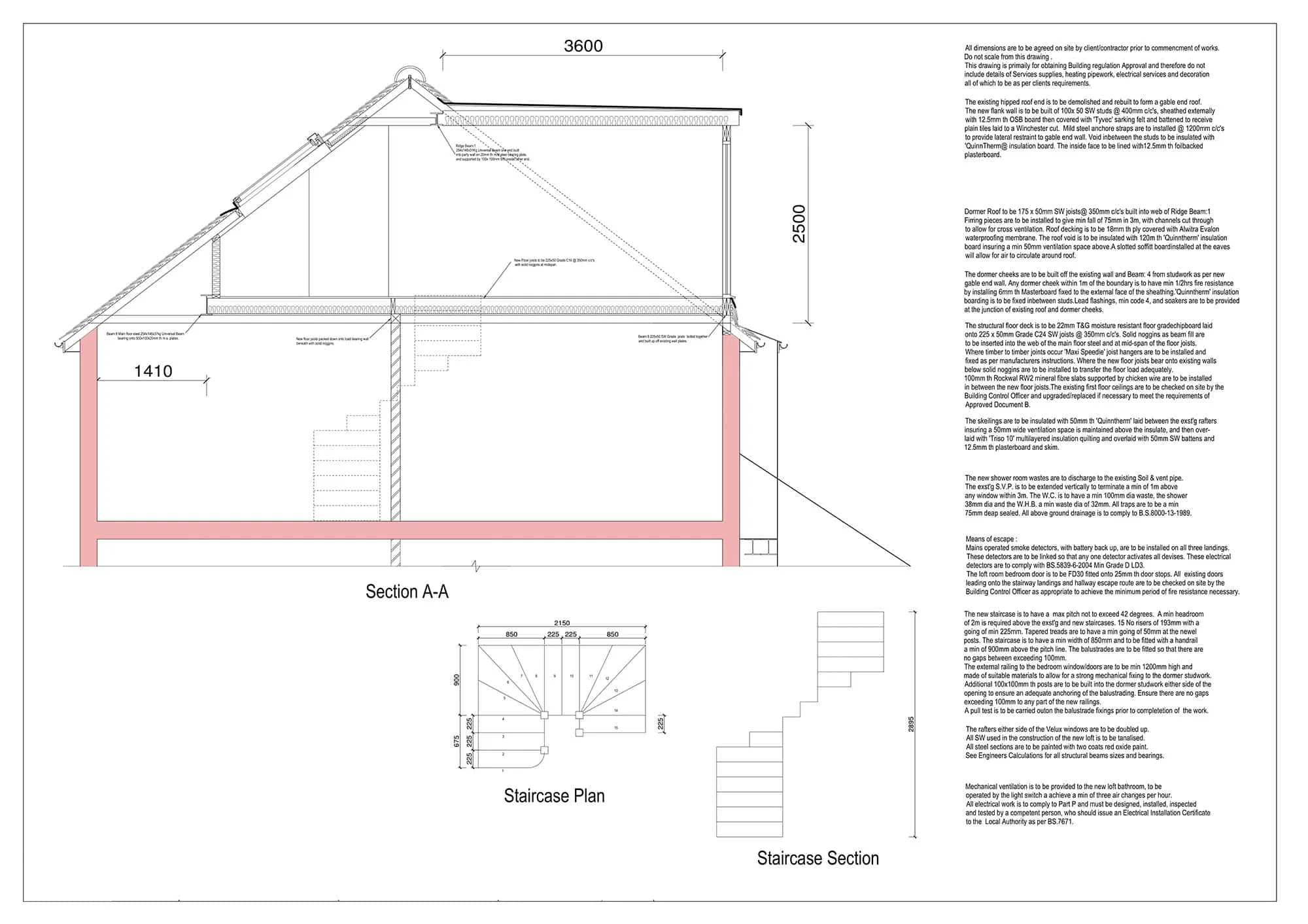
CS Lofts can manage the planning and building control side for you. Our in-house architect prepares the drawings, our team handles the structural calculations, and we guide the project through to completion.
Will I Need a Party Wall Agreement?
Yes. If the work you are doing affects a shared wall, a boundary, or a shared structure, party wall matters under the Party Wall etc. Act of 1996 will definitely apply. That is incredibly common with maisonettes because, by definition, you are often attached to neighbouring homes or sitting within a larger converted building.
On top of dealing with the people next door, you also have a unique situation where you may have neighbours living directly below you who need to be officially notified about the work happening right above their ceiling.
Will My Home Turn Into a Dusty Building Site for Months?
It depends on the roof, the head height, planning position, and what you want from the room.
Velux Conversion
A Velux or rooflight conversion can work when the existing loft already has enough headroom. It keeps the roofline more subtle and brings in natural light through roof windows.
Dormer Conversion
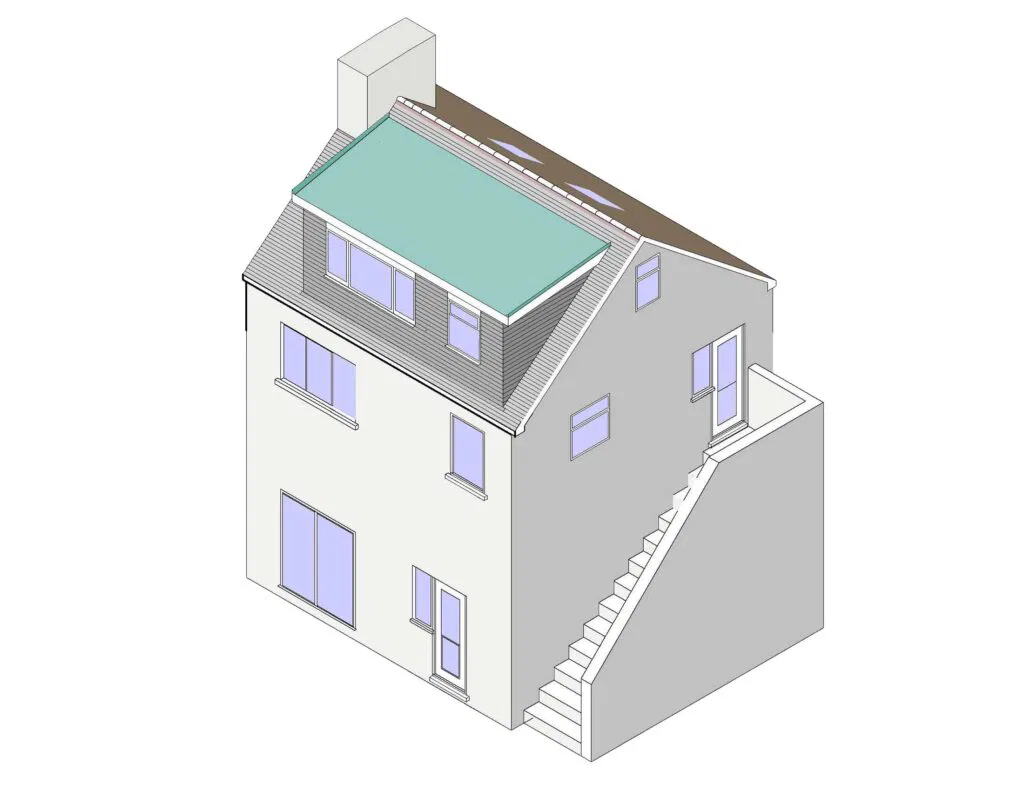
A dormer conversion extends the roof at the rear to create vertical walls and standing height across a larger floor area. This is the most common route we take on maisonettes because it gives enough room for a proper bedroom, a bathroom, and a landing, which transforms how the property functions day to day.
Hip-to-Gable
For maisonettes with a hipped roof, a hip-to-gable conversion rebuilds the sloping side into a vertical gable wall, significantly increasing the usable footprint before the dormer element goes on.
Mansard Conversion
A mansard conversion changes the entire rear roof profile to create maximum space and is the right choice when you want the most out of the loft, and the property’s position allows for it.
Once we inspect the property, we can explain which route is most suitable.
How Much Does a Maisonette Loft Conversion Cost?
Maisonette loft conversions in London and Surrey typically fall between £55,000 and £75,000. That is a wide range, and deliberately so, because the legal, structural, and planning position can be genuinely different from one property to the next.
The final figure really depends on your existing roof structure, the type of conversion we’re doing, the extent of the structural work required, the finish you want inside, and those specific leasehold matters that sit completely outside a standard building contract.
There is no honest way to give you a meaningful number without looking at your specific property first. So we do not try to.
What we do at CS Lofts is survey the property properly, understand what you want from the space, and prepare a written quotation based on the actual scope. That quote is fixed from the moment you sign the contract. The price does not move for reasons within our control.
And that fixed price covers everything you need to get from raw roof space to a finished, habitable room: architectural plans and structural calculations, all building control fees and liaison, scaffolding and skips, all structural works and steels, high-performance insulation, the new floor structure and staircase, the roof and dormer or Velux as specified, internal walls, first and second fix electrics and plumbing within scope, internal doors, skirting, architraves, and a full plaster finish ready for you to decorate.
How Long Does a Maisonette Loft Conversion Take?
The actual construction time will naturally depend on the size and complexity of the specific project, but generally speaking, a maisonette conversion is likely to take anywhere from 8 to 12 weeks
Every CS Lofts contract states how long the build should take. If we overrun for reasons within our control, we pay you a pre-agreed amount (£500) for every working week beyond the agreed duration.
What Does the Build Look Like, and Can I Stay in My Home?
Yes, you stay in your home throughout. We use our Outside-In approach on maisonette builds, the same as every other conversion. The structural work happens from external scaffolding. We only open up your ceiling for the staircase once the new space above is built, dry, and completely watertight. Your home stays liveable and secure throughout the build. We’re also conscious of the neighbours below and manage noise and access accordingly.
Why Choose CS Lofts for a Maisonette Loft Conversion?
It really comes down to having specialist experience and absolute transparency. Here is exactly why homeowners choose us for their maisonette loft conversions:
- Specialist maisonette roof experience: We have extensive experience working with complex structures and can create practical solutions while maintaining structural integrity and safety.
- A full start-to-finish service: We cover the project from planning right through to completion, with a site manager coordinating the different trades on your behalf.
- A full, free roof survey: Carried out on every job to identify any underlying issues with the roof, chimney, or firewalls before work moves forward.
- Clear fixed pricing: A signed contract guarantees the agreed cost, unless you specifically request extra work or ask us to resolve a pre-existing issue.
- A £500-per-week penalty clause: Written into every single contract if the build exceeds the agreed timeframe.
- Quality materials: Installed by professionals, rather than using cheap materials that create problems later.
- Fully qualified and experienced tradespeople: We use our own trusted carpenters, plasterers, roofers, plumbers, and electricians.
- A dedicated team from start to finish: We don’t take on more than we can handle. Our rule is simple: two teams, two projects.
- A 10-year workmanship guarantee and full insurance: So your new space is backed and protected long after completion.
Find Out What Your Maisonette Roof Can Do
If you own a top-floor maisonette and think there may be usable space above you, the next step is simple. Book a free, no-obligation site survey with CS Lofts.
We will inspect the loft, talk through your ideas, explain the likely permissions, and give you clear advice on what is possible.
Call CS Lofts on 020 3659 8980 or get in touch through the contact page.
FAQs
If you are a leaseholder, yes. You either need formal consent from the freeholder, or you may need to purchase the freehold to the loft space outright. If you share the freehold, you will need the other party’s agreement. But don’t worry, we advise on your specific ownership position right at the initial survey stage.
No. Maisonettes and flats do not benefit from the Permitted Development rules that apply to houses. A full planning application is strictly required for any loft conversion on a maisonette.
We manage that relationship incredibly carefully. Party wall notices go out as required, and we work from the outside in to keep the noise and mess low. We are highly conscious that someone is living directly below the build throughout the entire process.